SEO Keywords for Photographers: How to Actually Choose the Right Ones
September 10, 2026

The best SEO keywords for photographers combine three things: what you photograph, where you photograph it, and what the person searching actually wants.
I run Belman & Co., an SEO agency that works with photographers and other service businesses. I also own Pasha Belman Photography, so the strategies in this article come from the same SEO for photographers strategy I use to rank my own photography business.
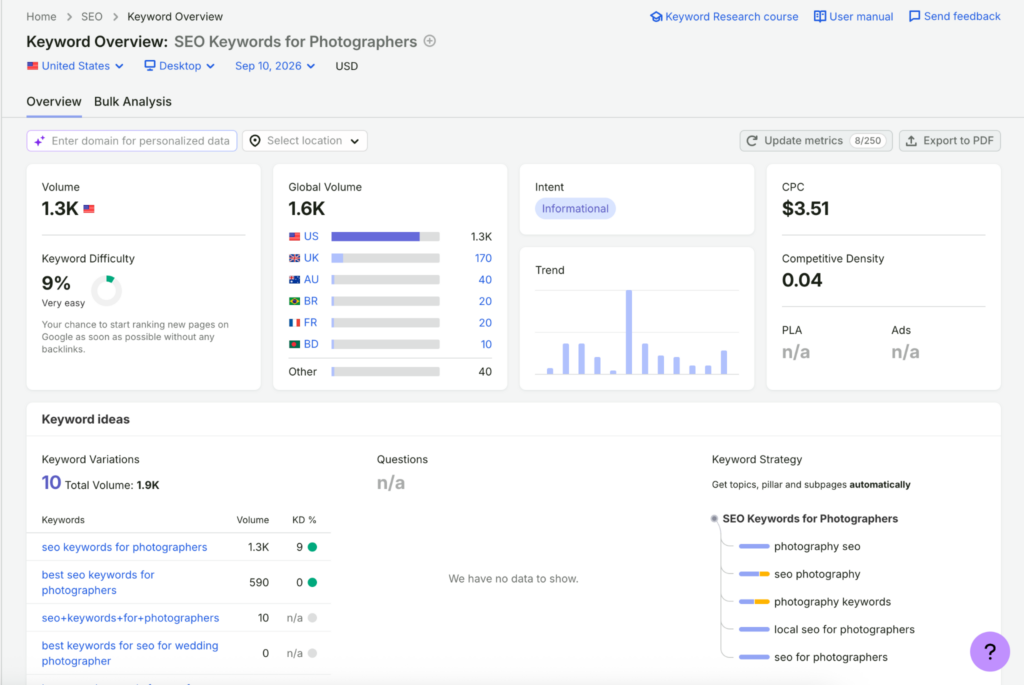
In Semrush, “seo keywords for photographers” gets about 1,300 searches a month in the US, with a Keyword Difficulty of 9. “Best seo keywords for photographers” adds another 590 searches a month at a Keyword Difficulty of 0. In Semrush, “seo keywords for photographers” gets about 1,300 searches a month in the US, with a Keyword Difficulty of 9. “Best seo keywords for photographers” adds another 590 searches a month at a Keyword Difficulty of 0. That tells us there is real demand from photographers trying to understand which keywords are actually worth targeting.
What Are SEO Keywords for Photographers?
An SEO keyword is the phrase someone types into Google when they need a photographer. It tells you what they photograph, where they are, and how close they are to booking.
“Wedding photographer” gives Google very little context about the service area. “Wedding photographer Charleston SC” gives Google much more context about the service and location the searcher is looking for.
Good keyword research for a photography site is not about finding hundreds of phrases. It is about finding the small number that match real client searches, then building pages that actually answer them.
The Best SEO Keywords for Photographers
Rather than one long list, think in patterns. Once you understand the pattern, you can build your own combinations for your specialty and market.
Service plus photographer plus location. This is the most common pattern and usually the most valuable.
- wedding photographer Charleston SC
- family photographer Myrtle Beach
- senior photographer Myrtle Beach SC
Location plus photography or photographer. Broader and more brand style. Usually worth targeting on a homepage or main location page.
- Myrtle Beach photographer
- Myrtle Beach photography
Best plus specialty plus photographer plus location. High intent, but check the SERP first. “Best” searches often surface review sites and directories, not individual photographers.
- best family photographer Myrtle Beach
- best wedding photographer Charleston SC
Service plus photos or photography plus location. A softer variation some clients use instead of “photographer.”
- family photos Myrtle Beach
- engagement photography Charleston
These patterns work, but do not assume every combination has real demand. Run each one through Semrush or Google Search Console before you build a page around it.
Local SEO Keywords for Photographers
For most local photography businesses, local keywords carry more weight than national ones. A family visiting on vacation and a couple planning a wedding are both searching with a place name attached.
For most local photography businesses, specialty plus location is usually more valuable than targeting a broad term like “photographer” alone. It gives Google more context about who should see the page, and it gives the searcher more confidence they clicked the right result.
If you serve more than one market, our local SEO services page covers how to do that without creating duplicate, thin pages.
Wedding Photography Keywords
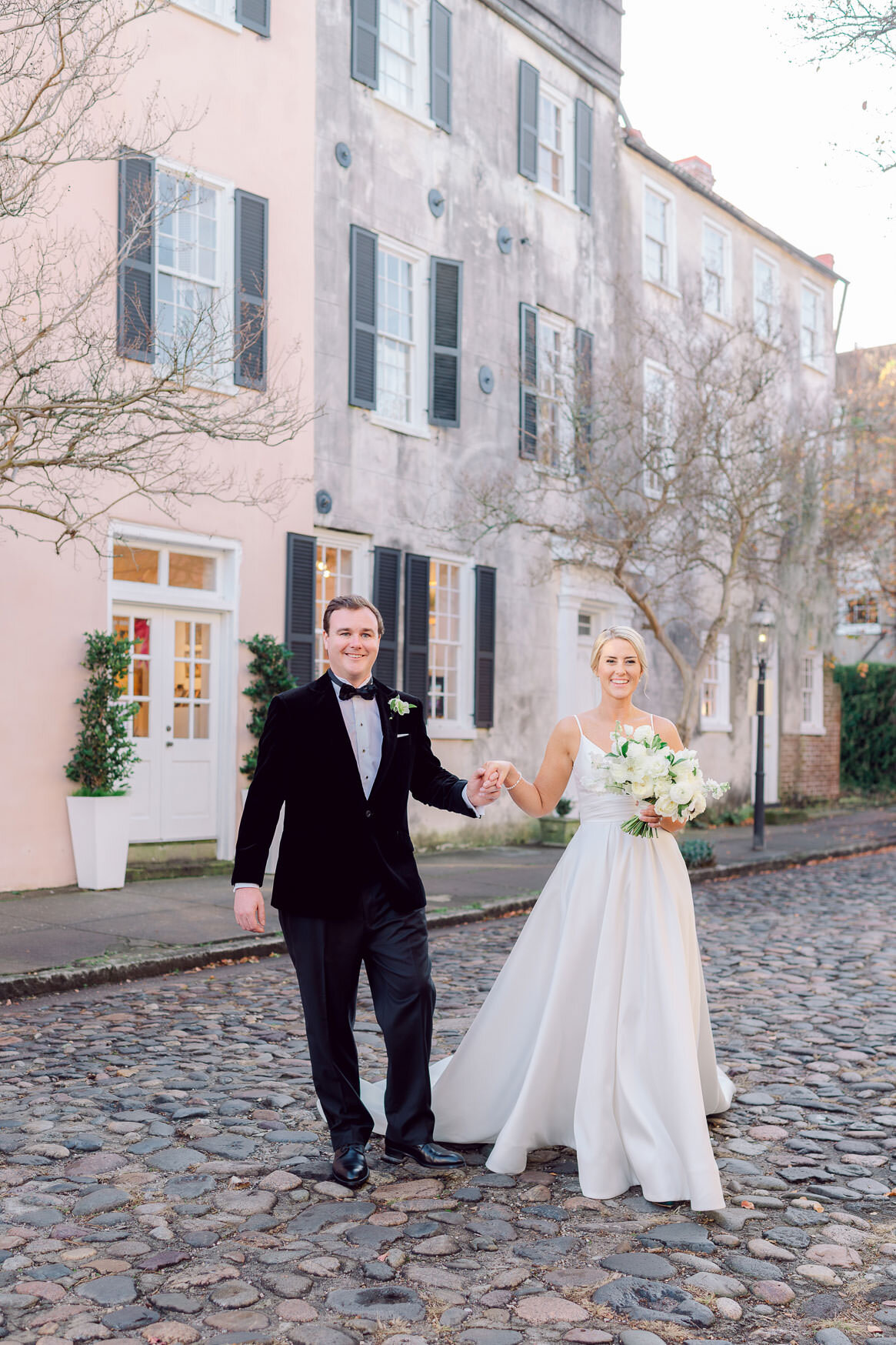
Wedding searches split into commercial and informational intent, and the keyword should match which one you are writing for.
Commercial searches look like “wedding photographer Charleston SC” or “Charleston wedding photographer prices.” These belong on your service page, not a blog post.
Informational searches look like “how much does a wedding photographer cost.” These belong on the blog, where they build trust and link back to your booking page.
Our SEO for wedding photographers page covers this strategy in more depth.
Family Photography Keywords
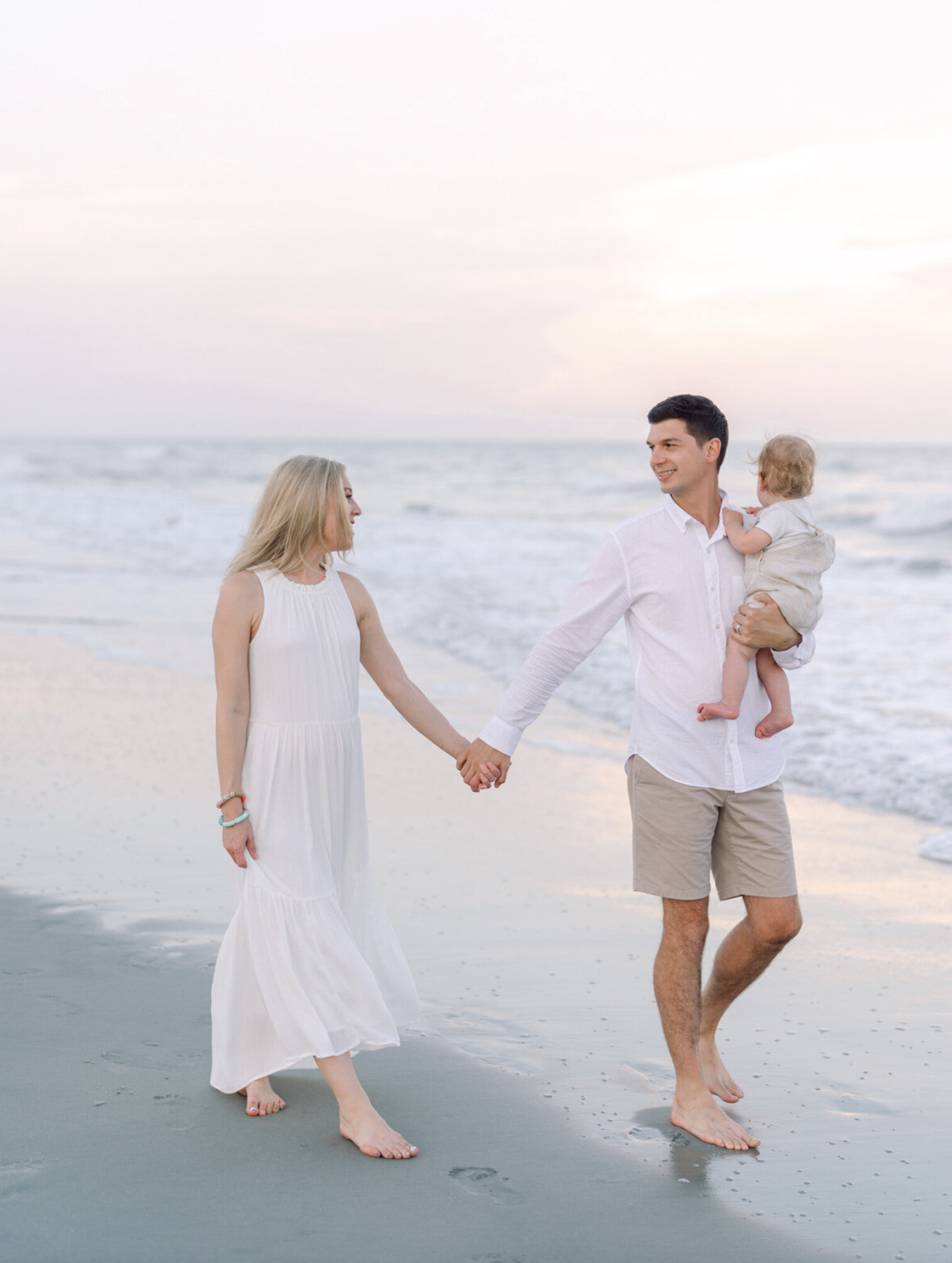
Family keywords tend to be seasonal and location heavy, especially in destination markets.
- family photographer Myrtle Beach
- Myrtle Beach family photos
- beach family photographer
- family photos on the beach Myrtle Beach
Family sessions are often booked by people already planning a trip. Keywords that combine a location with “family photos” or “family photographer” tend to outperform generic terms.
We go deeper on this in SEO for family photographers.
Senior Photography Keywords

Senior portrait searches are almost always local and often tied to a specific school or graduating class.
- senior photographer Myrtle Beach SC
- senior portraits Myrtle Beach
- high school senior photographer near me
Someone searching for a senior photographer in a specific city is usually actively evaluating photographers, which gives these keywords strong local commercial intent even at lower volume.
More detail is on our SEO for senior photographers page.
Photography Blog Keywords
Not every keyword belongs on a service page. Informational searches are where a blog earns its place.
- what to wear for family photos
- best wedding venues in Charleston
- best locations for engagement photos in Myrtle Beach
- sunrise versus sunset family photos
- when to book a family photographer
- what happens if it rains during family photos
These posts can introduce potential clients to your business earlier in their search. Their job is to answer the question well, build topical relevance around your core services, and give the reader a natural path to the service page that can convert them.
High Intent Versus High Volume Photography Keywords
Search intent matters more than search volume when the goal is generating photography inquiries.
A broad informational photography keyword may receive considerably more searches than a local service keyword. But someone searching “family photographer Myrtle Beach” is much closer to hiring a photographer than someone searching a general photography question.
I would rather rank for a lower volume keyword that converts than a higher volume keyword that mostly generates curiosity.
How I Choose Keywords for a Photography Website
This is the actual process I run for Pasha Belman Photography and for the photographers we work with at Belman & Co.
I start with the photography service and the actual geographic market it serves. Then I check Semrush for search volume and Keyword Difficulty on the terms that fit.
Next I look at the current Google SERP for that term. Who is ranking, and what kind of page did they build to get there.
Then I work out search intent. Is this a commercial search, an informational search, or a local search.
After that I check the site itself. Does an existing page already own this keyword, or would a new page create cannibalization instead of helping.
I also look for internal linking opportunities, since a new page is only as strong as the pages pointing to it and the pages it points back to.
Once a page is live, Google Search Console becomes the most useful tool in the process. It regularly surfaces queries I never intentionally targeted.
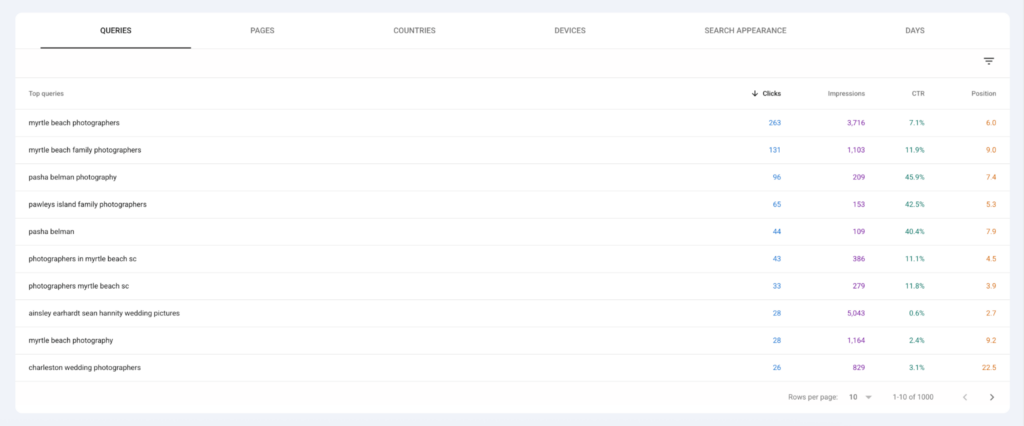
Those queries often reveal secondary keywords worth adding to the page, new blog topics, sections that deserve to be expanded, or an entirely new service page I had not planned. You can see this process applied to a real photography business in our Pasha Belman Photography case study.
Where Should Photography Keywords Go?
Placement matters as much as the keyword itself.
- SEO title: the primary keyword, near the front
- H1: the primary keyword, used naturally
- Introductory copy: the primary keyword within the first sentence or two
- H2s: secondary keywords and related questions, only where they fit the content
- Body copy: natural variations, not the exact phrase repeated
- Image alt text: the actual photograph first, the keyword only if it accurately describes what is in the image
- Internal links: descriptive anchor text pointing to the right service page
- URL slug: short and readable, matching the keyword where possible
The alt text point is worth repeating. If a photo is a close up detail shot of a wedding ring, the alt text should describe that, not a location keyword that happens to need a home somewhere on the page.
Photography Keyword Mistakes I See
- Targeting only broad terms like “photographer” instead of specialty plus location
- Choosing a keyword because the volume looked big, without checking who actually ranks for it
- Targeting the same keyword on more than one page
- Building dozens of near identical city pages with swapped place names and no real local content
- Stuffing an exact match keyword into every heading and image on a page
- Ignoring search intent and writing a commercial style page for an informational query
- Publishing blog posts that never link back to a service page
- Targeting national keywords when the business only serves local clients
- Building a page because a tool showed volume, without ever looking at the actual search results
The city page problem deserves its own note. Near identical location pages with little more than the city name changed provide very little unique value and can create thin, repetitive content across the site.
How to Find SEO Keywords for Your Photography Business
You do not need an agency to start this process. A basic version looks like this.
- List every service you offer and every market you serve
- Combine them using the patterns from earlier in this article
- Check each combination in a keyword tool for volume and difficulty
- Search each term yourself and study who currently ranks
- Note which terms are commercial, which are informational, and which belong on a location page
Our free local SEO keyword generator can speed up step two by generating service and location combinations for you. Treat it as a starting point, and still validate the important ones with real search data and a look at the actual SERP before building a page.

When you want a full strategy built around your specific business, our keyword research services handle that process end to end. Our on page SEO services cover getting those keywords properly placed once you have them.
What to Do After Choosing Your Photography Keywords
Picking the right keywords is the starting point, not the finish line. The next step is mapping each one to the correct page type and making sure nothing on your site competes against itself.
Our SEO checklist for photographers walks through that mapping process page by page.
If you would rather have the entire strategy built and managed for you, that is what we do on our SEO for photographers page.
Frequently Asked Questions
What are the best SEO keywords for photographers?
The best keywords combine a specific service, a specific location, and clear intent, such as “wedding photographer Charleston SC” rather than just “photographer.”
Should every photography page target a city keyword?
No. Only build a dedicated location page when that market has genuine search demand and you can write real, useful content about serving it.
Is high search volume always the best keyword to target?
Not necessarily. A lower volume, local keyword often converts better than a higher volume informational term, because the searcher is closer to booking a photographer.
Where should I put my main keyword on a photography page?
In the SEO title, the H1, and the opening paragraph, then naturally throughout the body copy and relevant headings. Avoid forcing it into image alt text unless it accurately describes the photo.